Managing Land Before Overgrowth Takes Over
Vegetation Management in Westville for properties losing usable space to encroaching plant growth
Granny Creek Mulching provides vegetation management in Westville, Lancaster, Taxahaw, Jefferson, Camden, and McBee for property owners facing steady encroachment from unwanted trees, vines, and undergrowth. When fence lines disappear under kudzu or pastures gradually shrink as saplings establish root systems, reactive clearing becomes far more expensive than routine control. Properties across South Carolina see rapid regrowth during humid spring and summer months, making consistent management the only practical approach to maintaining boundaries and usable acreage.
This service controls plant growth across residential lots and rural tracts by targeting vegetation before it becomes established enough to resist standard clearing methods. The approach varies based on property type and vegetation density, addressing everything from invasive vine systems along property edges to volunteer tree growth in cleared pastures. Regular management prevents root systems from maturing to the point where removal damages soil structure or requires heavy equipment access.
Request a free estimate and year-round maintenance plan based on your property's size and vegetation pressure.
How Routine Management Prevents Costly Restoration Work
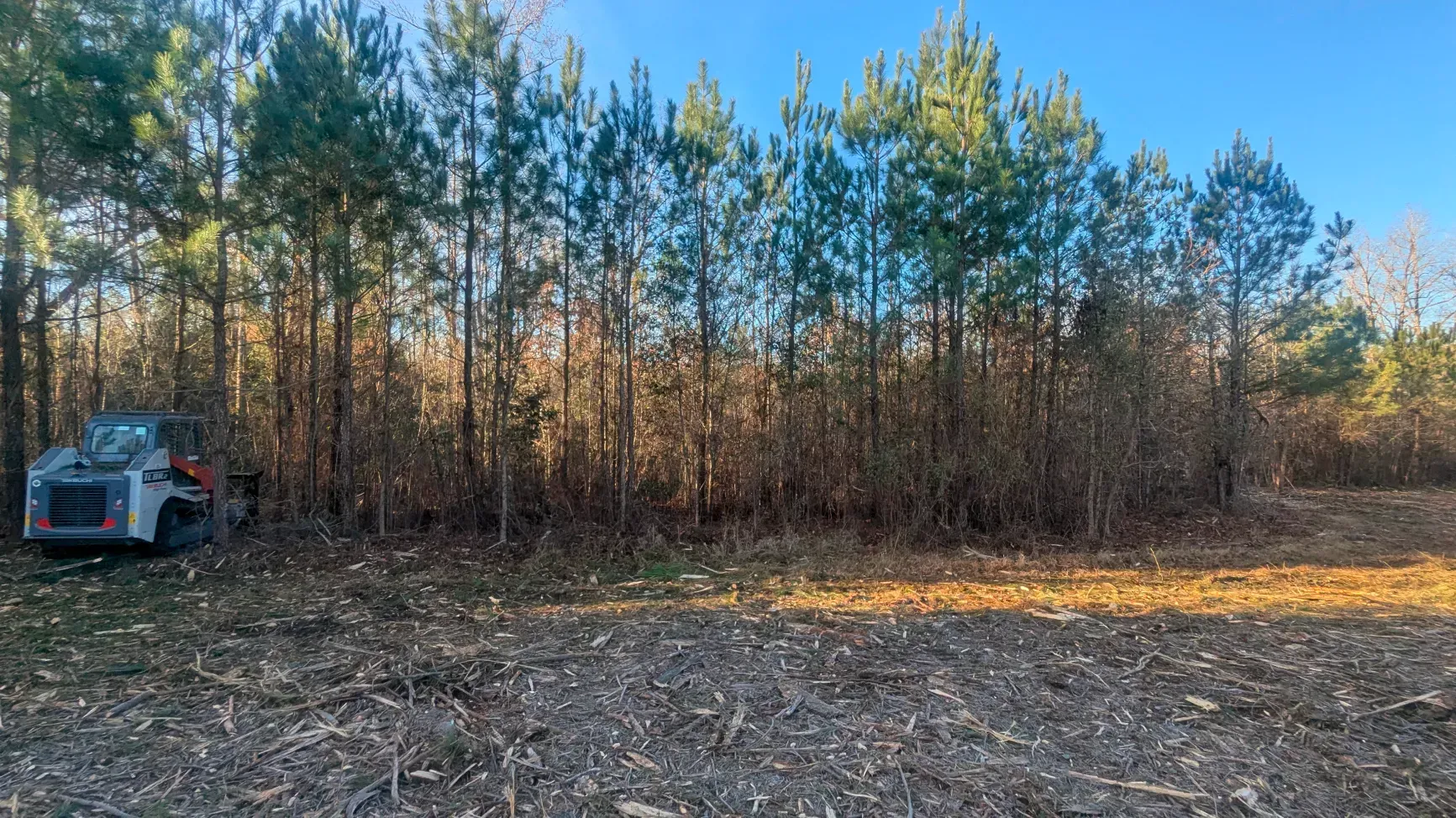
Vegetation management works by interrupting growth cycles before plants establish the root mass and canopy coverage that make removal disruptive. Young saplings and spreading vines respond to cutting or mulching without leaving stumps that resprout aggressively, while mature specimens often require stump grinding and herbicide treatment to prevent regeneration. The difference between managing a three-foot pine volunteer and removing a fifteen-foot established tree is measured in both cost and ground disturbance.
After consistent vegetation control, you notice clear sight lines along fence rows, maintained buffer zones around structures, and pasture boundaries that stay where you set them. Driveways remain accessible without branch interference, and utility easements stay clear without emergency cutting. Properties under routine management avoid the cycle of expensive restoration work followed by rapid regrowth that characterizes neglected land.
The service includes assessment of vegetation pressure specific to your property, identification of problem species that spread aggressively in your soil type, and scheduling based on seasonal growth patterns. It does not include hardscape installation or grading work, focusing instead on plant control that preserves existing topography and drainage patterns.
What Property Owners Ask About Land Control
Managing vegetation across larger properties raises questions about timing, methods, and what realistic maintenance looks like given South Carolina's growing season.
What determines how often a property needs vegetation management?
Growth rate depends on soil moisture, sunlight exposure, and which plant species dominate your area, with some properties requiring attention twice yearly while others maintain control with annual service.
How does management differ for residential lots versus rural acreage?
Residential work prioritizes appearance and safety around structures, while rural management focuses on maintaining usable land, controlling invasive species, and preserving property value across larger areas with varied terrain.
When is the best time to start a vegetation control program?
Early spring before active growth begins allows you to address winter dieback and set boundaries before the growing season, though properties with severe overgrowth benefit from initial clearing regardless of season.
Why do some properties experience faster regrowth than others in Westville?
Properties with high water tables, rich bottomland soil, or nearby seed sources from mature trees see more aggressive volunteer growth, requiring more frequent attention than well-drained upland sites.
What should I expect during the first year of management on previously neglected land?
Initial clearing removes established growth and exposes the extent of root systems and seed banks in the soil, with follow-up visits addressing regrowth as stored energy in root systems depletes over subsequent seasons.
Granny Creek Mulching develops maintenance plans that account for your property's specific vegetation challenges and management goals. Contact us for a free estimate that identifies priority areas and establishes a schedule that prevents overgrowth from reclaiming cleared land.