Access Routes Through Wooded Property
Right-of-Way Clearing in Camden for driveways, utility lines, and paths that require consistent width and safe passage
Dense vegetation blocks access to driveways, utility easements, and property interior areas, preventing maintenance crews, emergency vehicles, and service providers from reaching the areas they need to access. Right-of-way clearing establishes defined corridors through wooded or overgrown land, maintaining consistent width and clear boundaries so the path remains functional year-round. The service applies to private landowners installing driveways, utility companies running power or water lines, and property owners needing access for fencing, equipment, or future development.
Granny Creek Mulching clears corridors by removing trees, brush, and ground vegetation within the specified width, then managing debris so the path is immediately usable. The work preserves the surrounding forest or vegetation buffer while creating a distinct, maintained route that won't close in quickly from lateral growth. In Camden, where pine and hardwood mix creates fast regrowth, clearing methods focus on root removal or mulching techniques that slow the return of woody vegetation along corridor edges.
Contact (803) 310-4404 for a free consultation to discuss your access needs and property layout.
What Right-of-Way Clearing Actually Accomplishes
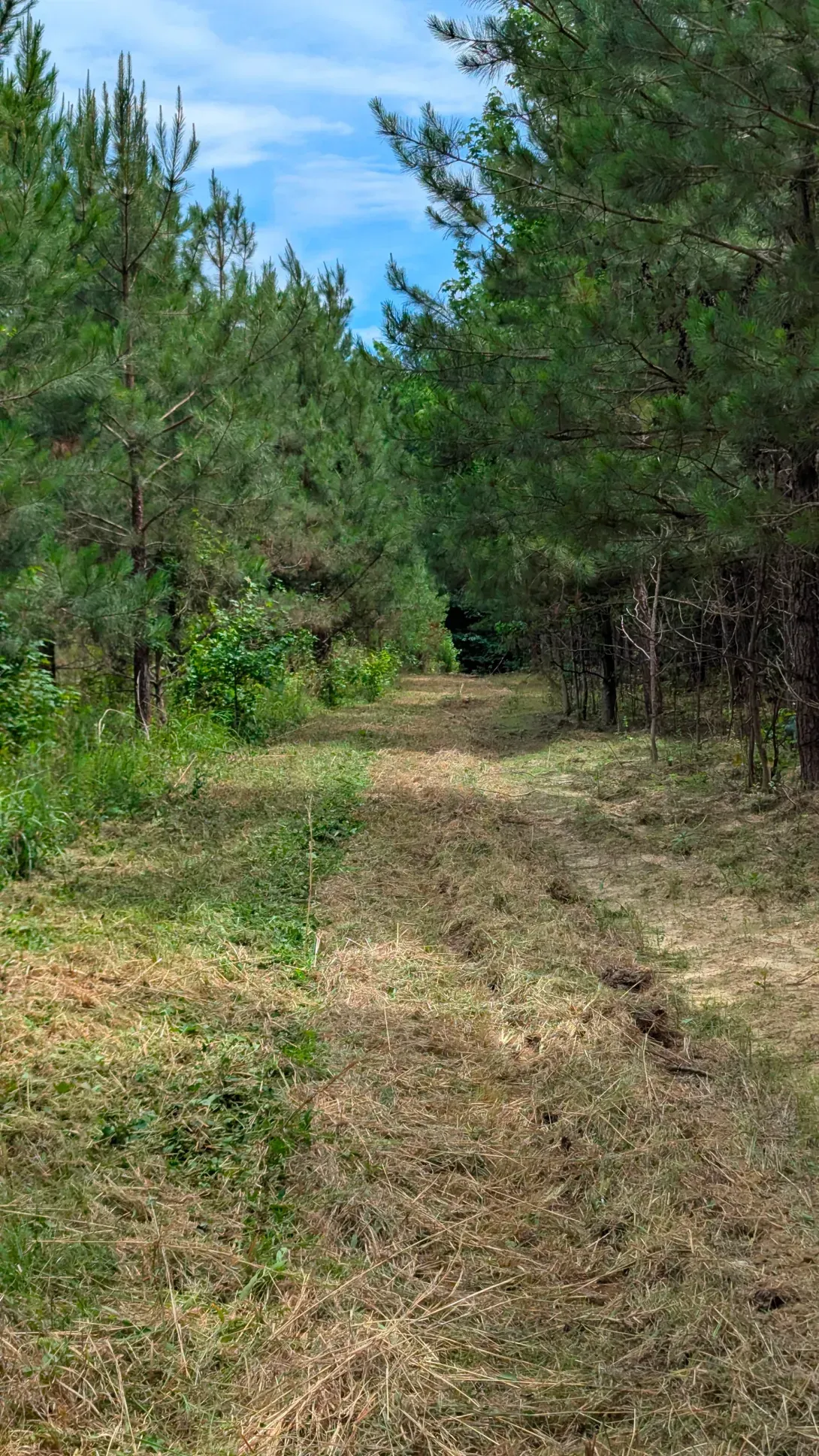
Clearing a right-of-way requires maintaining a corridor wide enough for its intended use—narrow for foot paths or utility access, wider for vehicle traffic or emergency access—while minimizing disturbance to areas outside that corridor. Equipment operators follow marked boundaries, cutting vegetation to ground level and either grinding stumps below grade or removing them entirely depending on whether the path will be driven on or serve as a walking route. Consistent width prevents encroachment from side growth and ensures vehicles or equipment don't scrape overhanging branches or get blocked by regrowth.
Once clearing is complete, you'll notice a well-defined path where travel is straightforward and visibility extends along the route rather than ending a few feet ahead. Utility workers can reach lines without cutting their way in each visit, driveway access becomes reliable in all weather, and fencing crews or surveyors can move through the property without obstruction. The cleared corridor also improves safety by reducing blind spots, eliminating trip hazards, and allowing emergency responders to navigate private land when necessary.
The service doesn't include grading or surfacing unless specifically requested, so the cleared path may need gravel, compaction, or drainage work depending on soil type and expected traffic. Some corridors are cleared once and maintained periodically, while others require initial clearing followed by regular mowing or trimming to prevent woody regrowth. Coordination with utility companies or surveyors ensures the corridor meets easement requirements and doesn't interfere with underground infrastructure.
What Landowners Frequently Ask
Property owners establishing access routes and utility paths often ask about width specifications, regrowth management, and how clearing affects the surrounding land.
How wide should a right-of-way be for vehicle access?
Driveway corridors typically range from twelve to sixteen feet to allow truck and equipment passage, while utility easements follow specifications set by the utility company or local code requirements.
What keeps vegetation from growing back into the cleared path?
Root removal, mulching, or periodic maintenance cutting prevents woody regrowth, and some landowners apply gravel or ground cover to further discourage plant reestablishment along high-use routes.
Can right-of-way clearing navigate around existing trees?
Operators can adjust the corridor path to preserve large or valuable trees when feasible, though this may require slight realignment to maintain safe clearance and consistent width.
How does clearing affect drainage along the corridor in Camden?
Removing vegetation can concentrate water flow, so paths on slopes or in low areas may need drainage features like culverts or grading to prevent erosion or standing water after storms.
Is the cleared path ready for immediate use after clearing?
The path is passable on foot or with light vehicles once debris is removed, though heavy equipment or repeated vehicle traffic may require gravel or compaction depending on soil conditions and moisture levels.
Granny Creek Mulching establishes access routes and utility corridors that remain clear and functional across private and undeveloped land. Request a free estimate at (803) 310-4404 to plan your right-of-way clearing project.