Restoring Access After Trees Come Down
Storm Cleanup in Westville for properties blocked by fallen trees and accumulated storm debris
Fallen limbs across driveways and uprooted trees leaning against structures create immediate safety hazards that prevent normal property access. Granny Creek Mulching handles storm cleanup in Westville, Lancaster, Taxahaw, Jefferson, Camden, and McBee after severe weather events deposit branches, split trunks, and wind-damaged vegetation across residential and rural land. Damaged trees often remain partially attached or suspended in canopy structure, creating unstable conditions that worsen with time as wood dries and weight distribution shifts.
Storm cleanup removes fallen trees, detached branches, and debris fields left by high winds or ice accumulation. The work prioritizes areas that block access routes, threaten structures, or pose injury risk from hanging limbs and leaning trunks. Large-scale projects involve clearing multiple downed trees and processing substantial debris volumes, while smaller jobs address isolated damage from single-tree failures or limb drops.
Contact us immediately after storm damage for urgent cleanup service and a free estimate that identifies critical hazards.
What Proper Debris Removal Requires
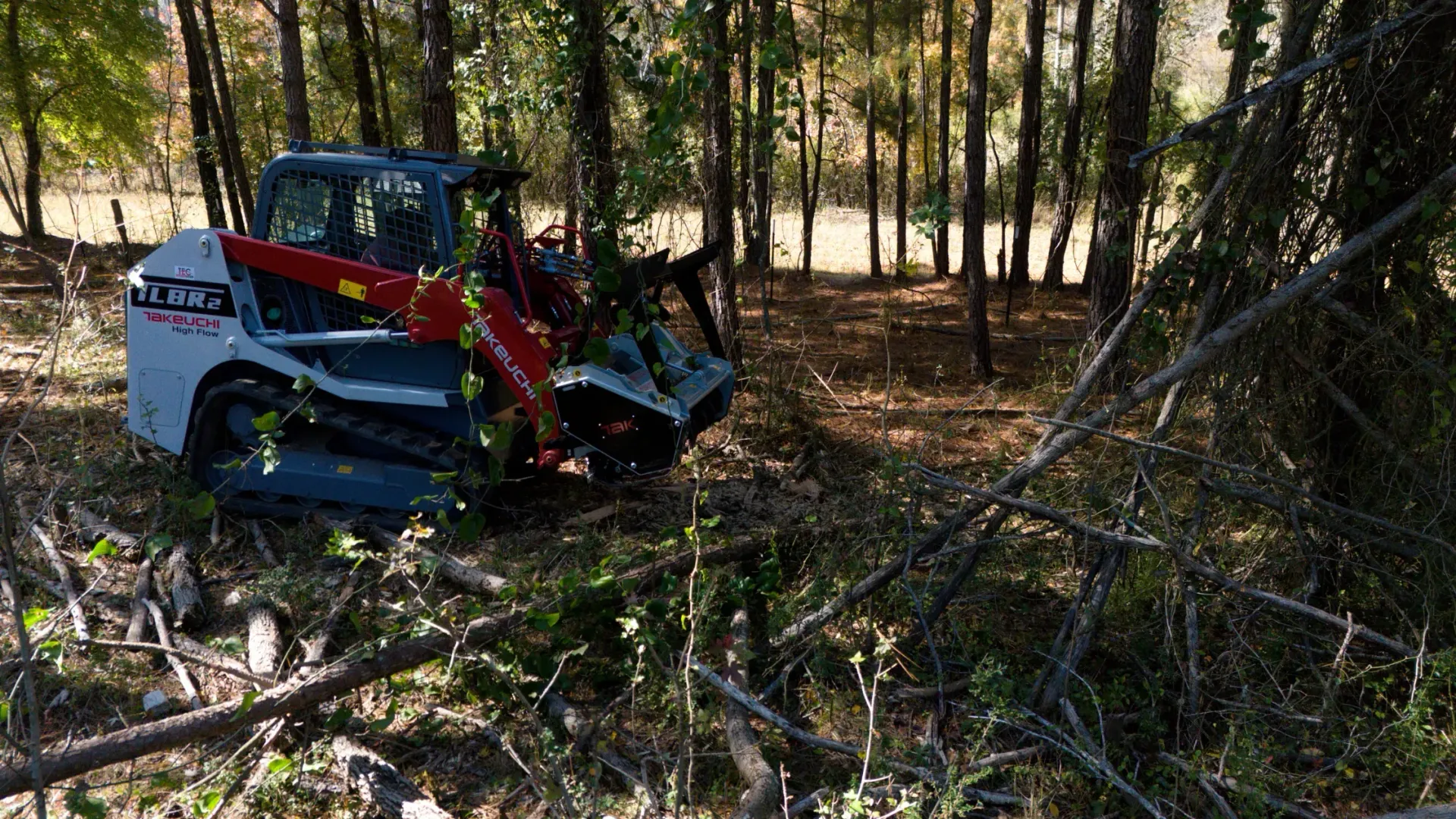
Effective storm cleanup begins with hazard assessment before cutting begins, identifying which trees remain under tension, which limbs are load-bearing in tangled debris piles, and where root balls have destabilized surrounding soil. Cutting sequence matters because releasing tension in the wrong order can cause sudden movement that damages property or injures workers. Equipment access determines whether trees are processed on-site or sectioned for removal, with ground conditions after heavy rain affecting what machinery can operate safely.
Once cleanup concludes, driveways and access routes become passable, hanging hazards no longer threaten structures or utility lines, and debris is processed into manageable form or removed entirely. Properties return to safe, functional condition without unstable trees waiting to fail further or debris piles that attract pests and decay near buildings.
Fast response matters because storm damage deteriorates rapidly, with exposed wood attracting boring insects, fungal colonization beginning within days, and secondary failures occurring as damaged trees lose structural integrity. The service works with property owners to prioritize critical areas first, addressing life-safety concerns before cosmetic cleanup, and adapting to insurance timelines when coverage applies to specific storm events.
Questions Before Starting Storm Recovery
Storm damage varies widely in severity and complexity, leading property owners to ask about response time, project scope, and what cleanup actually involves.
How quickly can cleanup begin after a major storm hits Westville?
Response time depends on widespread damage across the service area versus isolated incidents, with priority given to situations involving structural threats, blocked emergency access, or utility line interference.
What distinguishes urgent cleanup from standard debris removal?
Urgent work addresses trees on structures, limbs contacting power lines, blocked evacuation routes, or unstable hangers that could fall without warning, while standard removal handles ground debris and trees that have fully fallen in safe locations.
Why do some fallen trees cost more to remove than others?
Removal cost reflects tree size, location relative to structures and obstacles, whether the tree is whole or shattered into multiple pieces, soil stability around root balls, and equipment access to the work area.
How does cleanup handle trees that fell on fences or outbuildings?
Removal proceeds carefully to avoid additional damage, often requiring sectional cutting to relieve weight gradually and prevent structures from collapsing further as tree mass is removed.
What happens to the wood and debris after removal?
Material is typically processed into mulch on-site using specialized equipment, hauled away for disposal, or cut into manageable lengths and stacked if the property owner wants to retain firewood or timber.
Granny Creek Mulching responds to storm damage with assessment of hazards and a clear plan for restoring property safety. Reach out for immediate service that addresses your most critical cleanup needs and a free estimate covering the full scope of storm-related damage.